VFD Technology Empowers Textile Machinery: Principles, Efficiency and Smart Production Upgrading
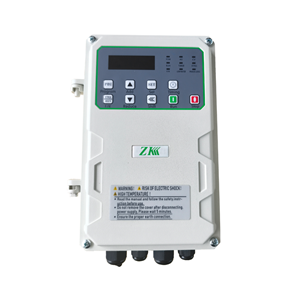
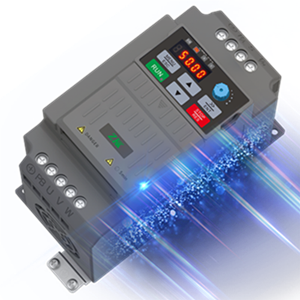
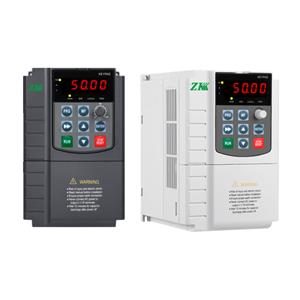
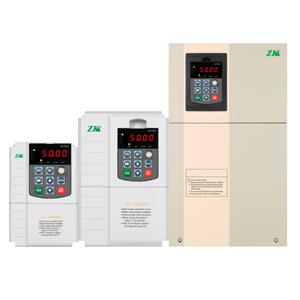
In today’s highly competitive textile industry, manufacturers are pursuing higher productivity, better fabric quality, lower energy consumption and more stable operation. Variable Frequency Drives (VFDs) have become one of the most critical components in modern textile machinery, supporting spinning, weaving, knitting, dyeing and finishing with advanced speed control and energy-saving performance.
The working principle of VFDs in textile machines is based on adjusting the output frequency and voltage to control the rotational speed of three-phase AC motors. Unlike traditional fixed-speed drive systems, which rely on gears, belts or mechanical clutches to change speed, VFDs convert the fixed-frequency mains power into continuously adjustable electrical energy, achieving stepless speed regulation.
First, the VFD rectifies alternating current (AC) into direct current (DC) through a rectifier circuit. Then, the inverter module reshapes the DC power back into AC power with adjustable frequency and voltage. By changing the output frequency, the motor speed changes proportionally. This electronic control method enables ultra-smooth starting, acceleration, deceleration and stopping, which is essential for textile processes.
In textile production, constant tension control is the key to ensuring product quality. During yarn spinning, winding, warping and weaving, any sudden speed change or tension fluctuation will cause yarn breakage, uneven cloth surface or chromatic aberration. VFDs achieve closed-loop control through real-time signal feedback, automatically adjusting motor speed to maintain stable tension throughout the entire process.
VFDs also support multi-axis synchronous control, which is widely used in composite textile equipment, printing machines and hot-air setting machines. Multiple motors can run in precise coordination at different speeds, ensuring stable operation of complex processes and greatly improving production pass rate.
From an energy-saving perspective, VFDs bring obvious economic benefits. Textile machines such as air-jet looms, circular knitting machines and dyeing vats often operate under variable load conditions. Traditional power-frequency drives run at full speed continuously, resulting in massive power waste. With VFDs, the motor automatically reduces speed and power output when load demand decreases, cutting energy consumption by 15%–35% in most textile applications.
In addition, VFDs provide complete protection functions, including overcurrent, overload, overvoltage, undervoltage and overheating protection. They effectively extend the service life of motors and transmission parts, reduce mechanical shock, lower noise and cut maintenance costs.
With the development of intelligent manufacturing, modern VFDs support communication protocols such as Modbus, Profinet and EtherCAT, enabling data exchange with central control systems. This allows real-time monitoring of operating parameters, remote fault diagnosis, production data statistics and intelligent scheduling, laying a foundation for digital and intelligent textile factories.
In summary, VFDs are not just speed regulation devices, but core components that improve quality, save energy, reduce consumption and enhance stability. By virtue of advanced working principles and reliable performance, VFDs continue to drive the transformation and upgrading of the global textile industry toward high efficiency, intelligence and green production.