Application Case | Application of 500kW Frequency Inverter in Die Casting Machine
Preface
For the die-casting industry, electricity consumption is a major component of production costs, and die-casting machines are among the main energy-consuming equipment in die-casting plants, often referred to as "electricity guzzlers." Therefore, reducing the energy consumption of die-casting machines is an effective way for the die-casting industry to reduce costs and improve product competitiveness.
Industry Overview
Currently, the vast majority of die-casting machines are hydraulically driven, with power in the hydraulic transmission system provided by an oil pump driven by a motor. During the die-casting cycle, the flow rate and pressure required by the die-casting machine vary at different stages, necessitating the use of flow valves and pressure valves to adjust these different requirements. Furthermore, when the load changes significantly, because the fixed displacement pump's output power is not adjustable, excess energy is wasted on baffles, oil circuit leaks, and increased oil temperature, exacerbating wear on various valves, causing excessively high oil temperatures, excessive motor noise, and shortened machine lifespan. Moreover, the designed motor capacity is often much higher than the actual requirement, resulting in a "large horse pulling a small cart" phenomenon and significant energy waste. Therefore, promoting the application of frequency converters in die-casting machines is of great significance for reducing energy waste.
Process Description
The mold closing and demolding systems of die-casting machines require relatively low oil pressure and short processing times; while the injection, holding, and cooling systems require higher oil pressure and longer processing times, generally 40% to 60% of a work cycle. The duration of each stage depends on the workpiece being processed; the length of the interval also depends on the workpiece being processed, and sometimes the interval can be eliminated. If the injection screw is driven by a hydraulic motor, the system oil pressure during injection will be higher. The weight of workpieces processed by die-casting machines ranges from tens of grams to tens of thousands of grams. Therefore, die-casting machines are classified as small, medium, and large. The cycle time for processing small workpieces weighing tens of grams is different from that for processing large workpieces weighing several kilograms. Even for the same die-casting machine, the pressure and time required in each stage of the process need to be adjusted depending on the raw material of the workpiece.
System Advantages:
1. After the upgrade, the frequency converter automatically adjusts the motor speed according to the pressure and flow required by the die-casting machine, resulting in significant energy savings, improved power factor, and reduced reactive power loss.
2. Soft start reduces the impact on the power grid, extends the lifespan of power supply equipment, and simultaneously increases the transformer's capacity, alleviating the pressure of capacity expansion.
3. Due to the reduced motor speed, oil pump wear is also reduced, noise is lowered, maintenance costs are reduced, and service life is extended.
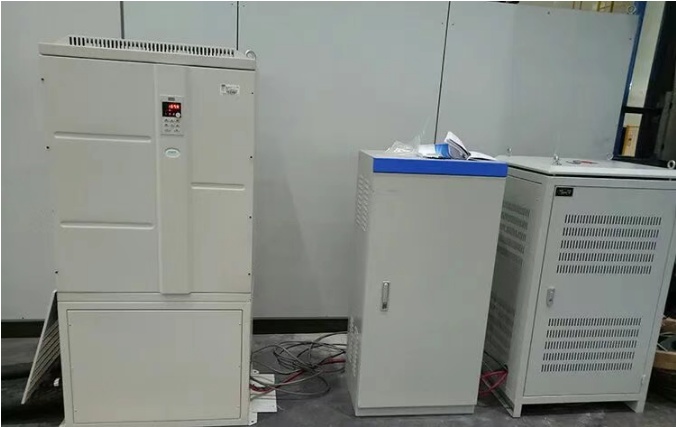
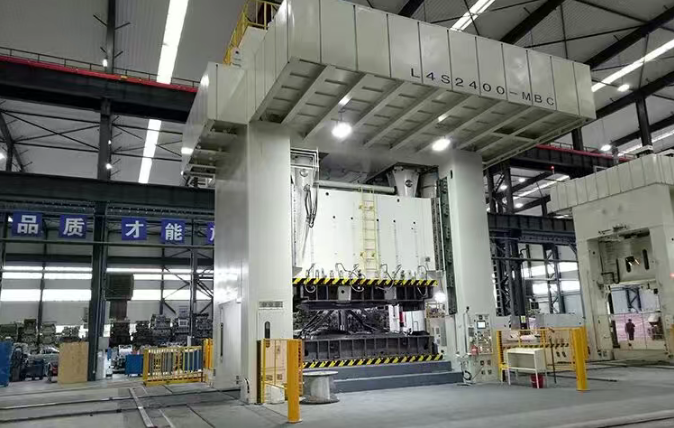
Below are images of a case study from a company in Chongqing:
Preface
For the die-casting industry, electricity consumption is a major component of production costs, and die-casting machines are among the main energy-consuming equipment in die-casting plants, often referred to as "electricity guzzlers." Therefore, reducing the energy consumption of die-casting machines is an effective way for the die-casting industry to reduce costs and improve product competitiveness.
Industry Overview
Currently, the vast majority of die-casting machines are hydraulically driven, with power in the hydraulic transmission system provided by an oil pump driven by a motor. During the die-casting cycle, the flow rate and pressure required by the die-casting machine vary at different stages, necessitating the use of flow valves and pressure valves to adjust these different requirements. Furthermore, when the load changes significantly, because the fixed displacement pump's output power is not adjustable, excess energy is wasted on baffles, oil circuit leaks, and increased oil temperature, exacerbating wear on various valves, causing excessively high oil temperatures, excessive motor noise, and shortened machine lifespan. Moreover, the designed motor capacity is often much higher than the actual requirement, resulting in a "large horse pulling a small cart" phenomenon and significant energy waste. Therefore, promoting the application of frequency converters in die-casting machines is of great significance for reducing energy waste.
Process Description
The mold closing and demolding systems of die-casting machines require relatively low oil pressure and short processing times; while the injection, holding, and cooling systems require higher oil pressure and longer processing times, generally 40% to 60% of a work cycle. The duration of each stage depends on the workpiece being processed; the length of the interval also depends on the workpiece being processed, and sometimes the interval can be eliminated. If the injection screw is driven by a hydraulic motor, the system oil pressure during injection will be higher. The weight of workpieces processed by die-casting machines ranges from tens of grams to tens of thousands of grams. Therefore, die-casting machines are classified as small, medium, and large. The cycle time for processing small workpieces weighing tens of grams is different from that for processing large workpieces weighing several kilograms. Even for the same die-casting machine, the pressure and time required in each stage of the process need to be adjusted depending on the raw material of the workpiece.
System Advantages:
1. After the upgrade, the frequency converter automatically adjusts the motor speed according to the pressure and flow required by the die-casting machine, resulting in significant energy savings, improved power factor, and reduced reactive power loss.
2. Soft start reduces the impact on the power grid, extends the lifespan of power supply equipment, and simultaneously increases the transformer's capacity, alleviating the pressure of capacity expansion.
3. Due to the reduced motor speed, oil pump wear is also reduced, noise is lowered, maintenance costs are reduced, and service life is extended.
Below are images of a case study from a company in Chongqing: