Powering Irrigation Across the Middle East & Africa
Off-Grid Solar Pump Inverters: Powering Irrigation Across the Middle East & Africa
Targeting MENA and Sub-Saharan Markets with MPPT Solar Inverter Technology
Introduction: The Solar Irrigation Imperative
Across the Middle East and Africa, a quiet revolution is taking place in agricultural fields. With over 600 million people dependent on rain-fed agriculture and temperatures rising year after year, the need for reliable, off-grid irrigation has never been more urgent. Traditional diesel pumps are expensive to operate and environmentally damaging. Solar pump inverters—backed by advanced MPPT solar inverter controllers—are emerging as the definitive solution for farmers across arid and semi-arid regions from Morocco to Kenya, from Egypt to Nigeria.
The global solar pump inverter market is expanding rapidly, driven by energy access initiatives, government subsidies, and increasingly aggressive renewable energy targets. For distributors, installers, and agricultural NGOs operating in these markets, understanding the technology and its real-world applications is essential to capturing growth.
Why Solar Pump Inverters Are Winning in Harsh Climates
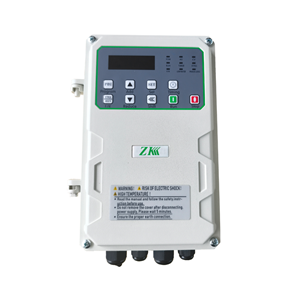
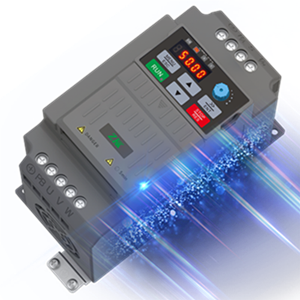
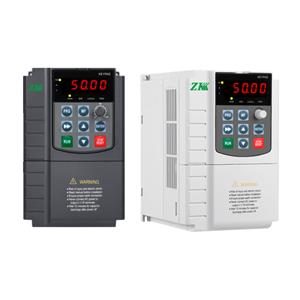
A solar pump inverter is fundamentally different from a standard power inverter. It conditions electricity generated by solar panels to drive a water pump—whether submersible, surface, or centrifugal—tailoring voltage and frequency to match the motor's requirements. The most advanced models on the market feature built-in MPPT (Maximum Power Point Tracking) solar inverter functionality, which extracts the maximum available power from PV arrays even under partial shading or fluctuating irradiance.
In practice, this means:
- Higher water output per watt of solar panel — MPPT technology delivers up to 25% more water compared to PWM controllers
- Automatic speed regulation — matches pump performance to available sunlight throughout the day
- Dry-run protection — prevents pump damage when water sources are depleted
- Remote monitoring via GSM or Bluetooth — increasingly standard in newer solar pump inverter controllers
These features make MPPT solar inverter–driven pump systems particularly well-suited to the extreme and variable conditions found across the Middle East and Africa.
Market Opportunity by Region
Sub-Saharan Africa presents the most compelling growth story. Countries like Kenya, Ethiopia, Tanzania, and Uganda have launched large-scale solar irrigation subsidies programs, recognizing that diesel costs make mechanical irrigation prohibitively expensive for smallholder farmers. Kenya's Solar Irrigation Program and Ethiopia's Agricultural Transformation Agency have both deployed thousands of solar pump systems in recent years. The continent's abundant solar resource—some regions receiving over 3,000 hours of sunlight annually—makes it ideal for off-grid solar pumping.
The Middle East and North Africa (MENA) region, while more mature in solar energy policy, still faces acute challenges in agricultural water management. Egypt, Morocco, and Jordan are aggressively expanding solar irrigation to reduce dependence on finite groundwater reserves and Nile water allocations. Morocco's Noor PV program and Egypt's Benban Solar Park demonstrate the region's commitment to solar at scale—and solar pump inverters are a natural extension of that investment into the agricultural sector.
Technical Considerations for Drought-Prone Environments
When specifying a solar pump inverter controller for deployment in arid and semi-arid regions, several factors deserve special attention:
1. Wide MPPT input voltage range — Allows the system to function efficiently from early morning to late afternoon as irradiance varies
2. High temperature derating —must perform reliably in ambient temperatures exceeding 45°C, common across the Sahel, Horn of Africa, and Arabian Peninsula