What Happens When the Solar Panel Short-Circuit Current (Isc) Exceeds the Solar Pump Inverter’s Max Input Current?
In the design of solar water pumping systems, we often receive a critical concern from customers around the globe: "If I add a few more panels in series to get more power on cloudy days, and the short-circuit current (Isc) of the panels exceeds the inverter’s maximum input current specification, will it burn out my device?"
This is a very professional and key question. As a brand specializing in high-performance pumping solutions, ZK INVERTER will thoroughly analyze this technical blind spot in this article and show you how to handle it correctly.
1. Core Conclusion: How Does the Inverter Handle Excess Isc?
First, the direct answer: In the vast majority of cases, even if the Isc of the PV array slightly exceeds the inverter’s rated max input current, the equipment will NOT be destroyed immediately.
This is because solar pump inverters (like the ZK series) primarily operate near the Maximum Power Point (MPP) of the PV modules, not in a short-circuit state.
Operating Current vs. Limit Current: The inverter, controlled by the MPPT algorithm, draws the Operating Current (Imp) , which is usually only 90%-95% of the Isc. The inverter’s “Max Input Current” parameter mainly limits the normal operating current.
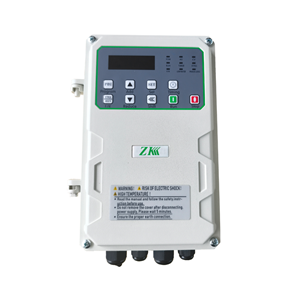
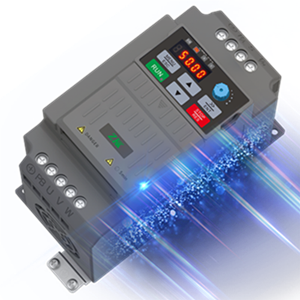
Current Limiting Protection: High-quality inverters (such as the ZK200-P series) have built-in intelligent current limiting circuits. When the input current exceeds the rated value, the inverter clamps the current within the allowable range by adjusting the load impedance. This phenomenon is known as “clipping” or “current limiting.”
Simply put, when faced with excessive Isc, the inverter usually chooses to “refuse” the excess current rather than “tough it out.”
2. In-Depth Analysis: Three Different Scenarios of Over-Rating
Although the equipment won’t burn out immediately, different degrees of over-rating lead to different system consequences:
Scenario 1: Slight Over-Rating (Imp exceeds limit)
Phenomenon: During the peak sun hours around noon, the inverter’s input current hits the hardware limit.
Result: Energy Loss. The inverter forcibly clamps the current at its maximum value, and the excess energy is “clipped off.” You might notice the power curve, which should be an arc, becomes a “flat top.”
Data: When Imp exceeds the rated value by 20% due to excessive Isc, the system may lose 5%-15% of its potential generation during peak sun hours.
Scenario 2: Severe Over-Rating (Isc approaches hardware limit)
Phenomenon: While the inverter runs, its internal power components (IGBTs) and capacitors are under full or even over-stress for extended periods.
Result: Overheating & Derating. The internal temperature rises sharply. When the temperature exceeds the threshold (typically above 50-60°C), the device initiates thermal protection, automatically reducing frequency or shutting down to cool off. For farm irrigation, this means the pump may stop working at noon when water is needed most.
Scenario 3: Short-Circuit Fault Occurs (Extreme Case)
Phenomenon: Aging wiring or damaged insulation causes a short circuit between positive and negative poles.
Result: Damage & Risk. If the panel’s Isc is significantly higher than the inverter’s maximum withstand short-circuit current (typically rated at 1.25x the max input current), the internal fuses and anti-reverse diodes may melt due to the massive thermal shock, potentially even causing a fire hazard.
3. Technical Standard: How to Match Correctly?
As a responsible manufacturer, ZK INVERTER recommends following these two golden rules for system design:
Rule 1: Voltage (Voc) – The Hard Limit
This is the bottom line. The open-circuit voltage (Voc) of the modules, under any low-temperature condition, must never exceed the inverter’s “Max Input Voltage.” (Exceeding the voltage limit causes physical damage and is irreversible).
Rule 2: Current (Isc) – Efficiency & Safety
This is about efficiency. According to NEC 690.8 standards, it’s recommended to leave a 25% safety margin.
Formula:
Module Isc × Number of Strings × 1.25 ≤ Inverter Max Input Current.
Real-World Example:
Assume the ZK200-2T-2R2 (2.2kW) inverter has a max input current of 9.6A.
If you use a 550W module (Isc ≈ 11.2A), then 1 string (11.2A) already exceeds 9.6A.
The inverter won’t break, but it will cause severe energy clipping. Conclusion: This inverter is only suitable for 1 string of lower-current modules, or you need to change the module selection.
4. The ZK INVERTER Solution
Our R&D team designed our products considering harsh operating conditions worldwide, especially in high-irradiation regions like the Middle East, Africa, and Latin America.
Wide Current Design: ZK series inverters use power modules with higher derating margins, providing greater tolerance against high-Isc modules.
Intelligent Over-Temperature Protection: When ambient temperatures exceed 50°C or current overload causes overheating, the device intelligently derates instead of failing catastrophically, protecting your asset as much as possible.
Precise MPPT Algorithm: Our algorithm actively maintains the operating point within the safe current range, ensuring full utilization of module generation in low-light conditions (morning/evening/cloudy) without overloading in strong sunlight.
Conclusion & Recommendations
When Isc exceeds the inverter’s max input current, the system is generally safe, but not efficient.
To maximize your return on investment and avoid energy waste during peak sun hours, be sure to provide your module parameters to our sales engineers when selecting equipment. ZK INVERTER is committed to providing a full range of high DC/AC ratio pump inverters from 0.4kW to 110kW, helping you achieve your goals of more pumping, lower investment, and zero failures.
Have Questions?
Contact ZK INVERTER today for a free system configuration sheet. Let us help you calculate the optimal panel string configuration!